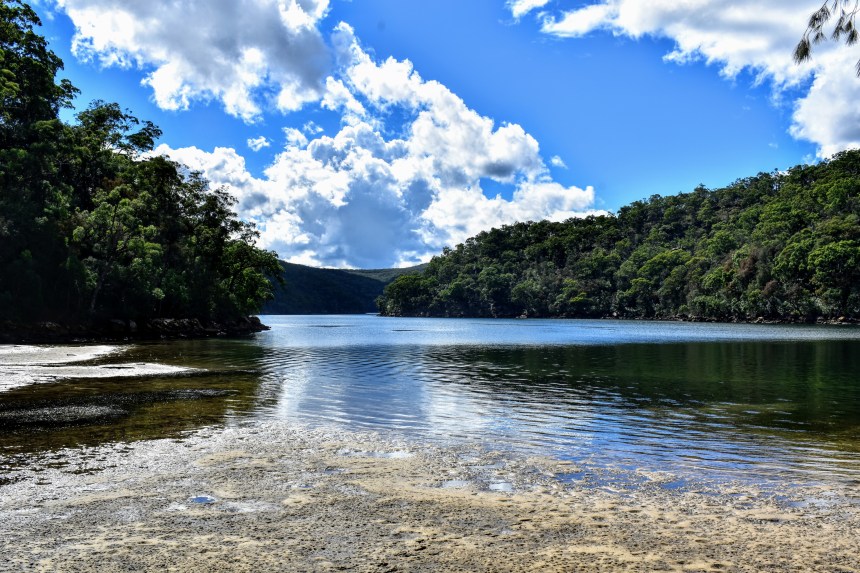
Waratah Bay & Bobbin Head, from Berowra
April 17, 2019
There are often multiple tracks to get from one point to another in our national parks, and that’s definitely the case in Ku-ring-gai Chase. After toying with the idea of entering at Mt Kuring-gai (yes, different spelling), we opted for Berowra because, well, it’s just a better walk.
The entry point is north of the railway station and over the bridge spanning the freeway. The track is well-marked, well-maintained, and proceeds downhill at a comfortable grade, zigzagging down the ridge before connecting with Waratah Gully for the walk right down to Waratah Bay.

There wasn’t much water in the creek, but the rainforest was lush, and despite the relatively cool temperature, the humidity was pretty high. I’ll confess to not paying as much attention to this stretch as I should have because I was rushing to the river to try to get mobile phone coverage for a conference call. Surprisingly (thankfully??), coverage was non-existent despite moving around the bay, so normal focus on the bushwalk resumed.

For me, this is the best reason for the Berowra entry compared with Mt Kuring-gai. The track runs along the edge of Cowan Creek for about three kilometres, tracking in and out of the bays, crossing Aboriginal middens, and always under the shelter of the eucies and she-oaks.
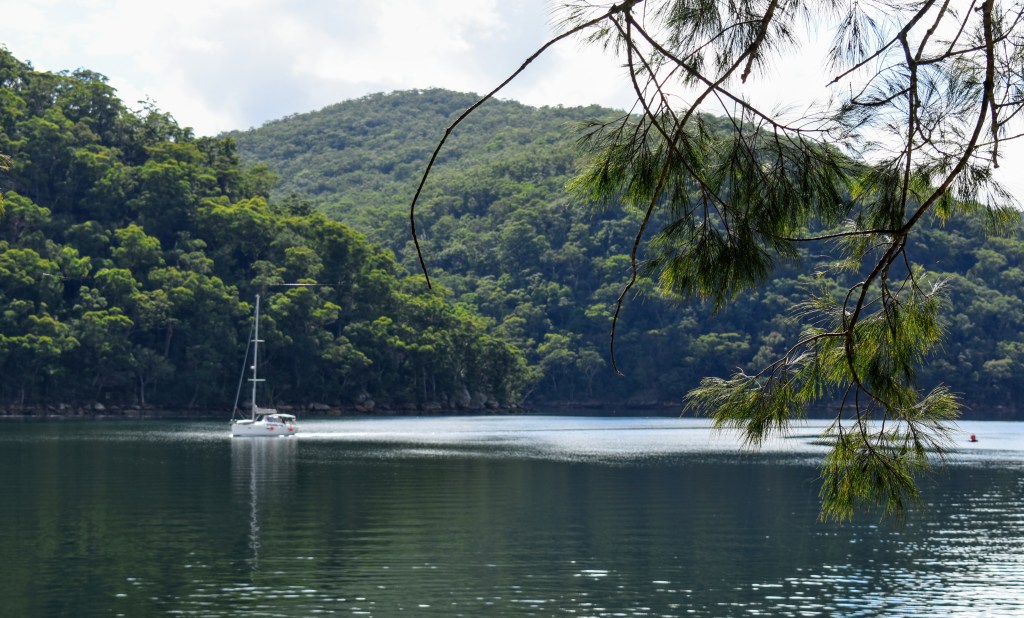
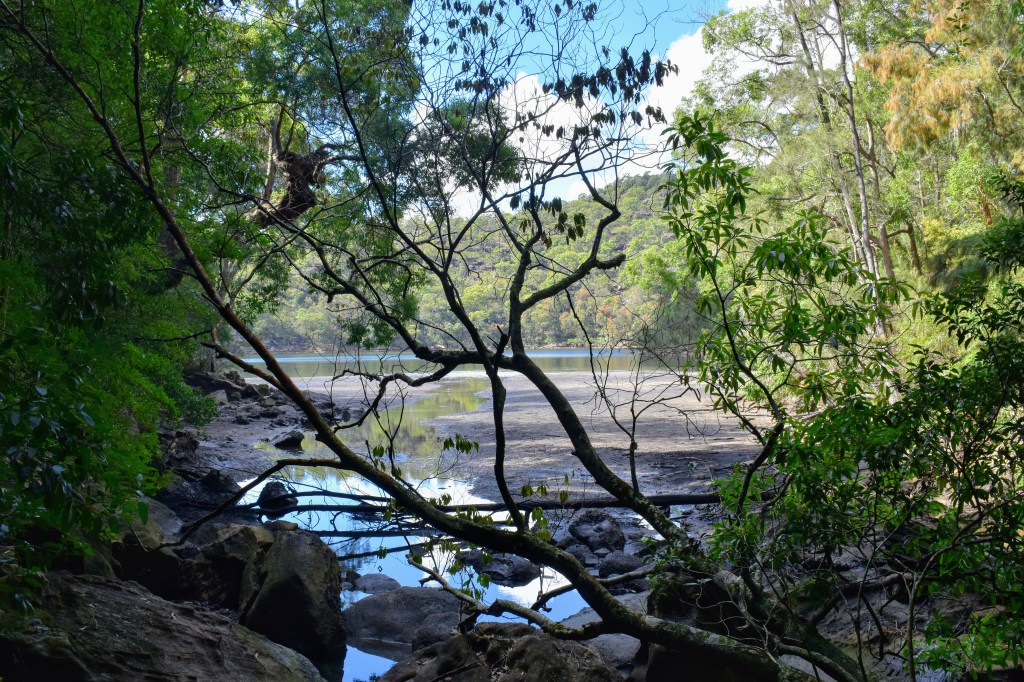
As you round the headlands, the views open out upriver and downriver, and the cormorants spend more time underwater than above, hunting the fingerlings. Inside the bays, the picture changes to moss-covered rocks and ferns, plus young mangroves poking through the low-tide sandbanks while the semaphore crabs scuttle away at our approach.
Not long before reaching Apple Tree Bay, we came across a massive goanna, spooked by a party approaching from the other direction. It took sanctuary on the trunk of a large tree, glared at us, then leisurely climbed higher, never ceding its right of belonging.

Over my lifetime, I’ve been to Apple Tree Bay countless times. My mother worked for at the Ku-ring-gai Chase park headquarters, so I spent many school holidays with a pretty good run of the park. Apple Tree Bay was a place for me to launch my kayak, but outside of some improvements in terms of access and parking, it’s still a pretty dull place to hang out.
So we added another K walking along the road to Bobbin Head, which is a far more interesting place to break for lunch. My caffeine-deprived walking mates headed for the Bobbin Inn, and that’s where we spelled. But there are a few other ways you could spend your time.
Bobbo is a bit of a throwback in time. The picnic shelters date back to the early years of the 20th century, as does the Bobbin Inn, which has transmogrified from a genuine hotel to an information centre and cafe. But take a look at some old photos, and nothing much has changed. The marina is now populated with impressive and expensive leisure-craft, but there are still plenty of historic launches on the moorings.
The Halverson family operated the boatshed for many years, servicing and renting out their distinctive motor cruisers which they built at a couple of sites on Sydney Harbour. These classic craft are now highly-treasured, and are still a delight to see plying Pittwater. There’s a wonderful book Wooden Boats, Iron Men written by one of the family, if you’d like to explore more.
But onwards and upwards. Just behind the café is the entry to the Kalkari walk, and the initial tidy sandstone steps soon give way to a zigzag uphill, sometimes a little challenging for those of us with weary knees.
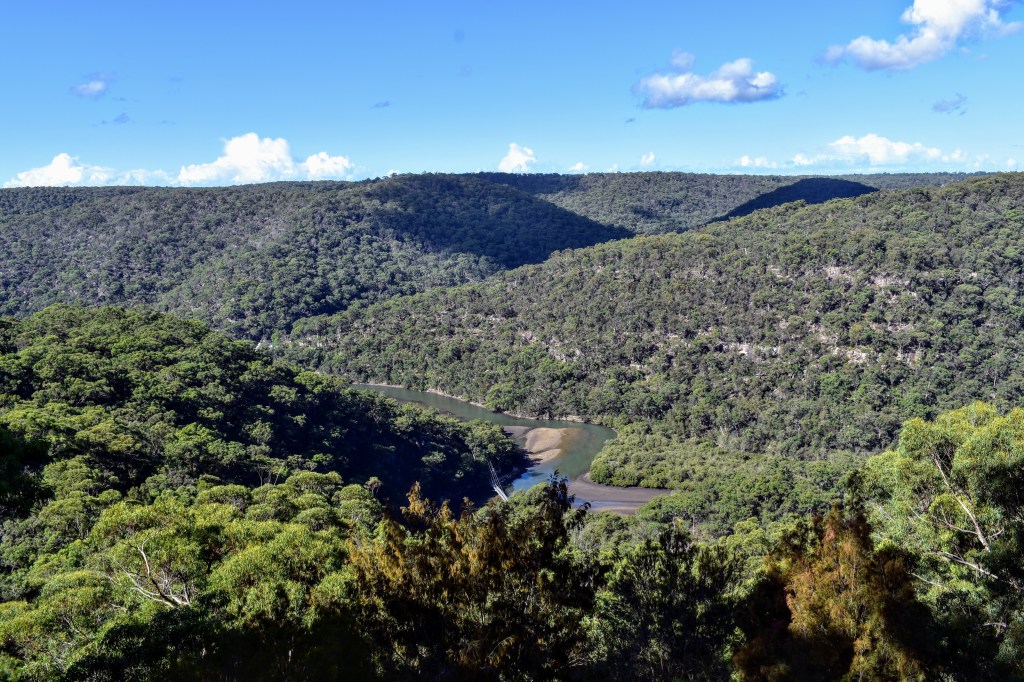
It’s worth pausing for a breath every now and then, because the views back down over Bobbin Head are pretty good, and there’s plenty to see along the track too. At one point, we find ourselves between two black cockatoos, just chatting.
The walking is pretty easy, and we find ourselves skirting the high fences of the Kalkari animal refuge, where injured animals are rehabilitated. The visitor’s centre is here also, and you can visit the Discovery Centre and walk around the enclosed section to learn more about the local flora and fauna. Kalkari has changed a lot since I was a teenager, but it’s still engaging and is certainly worth a visit.

From Kalkari, it’s a nice walk out of the park. The track roughly parallels the road but deviates occasionally and runs through dry sclerophyll forest, since we’re now at the top of the ridge. You hit the electricity lines occasionally, but hey, that’s suburbia.
Turn right after you cross the freeway, and head to Mt Kuring-gai railway station for the trip home. Sorry, no pubs here….
 On The Emerald Edge
Leave a comment