Hunters Hill, Woolwich & Kelly’s Bush
January 25, 2019
The Great North Walk spends most of its 250km length running through bushland between Sydney and Newcastle, but with its initial stretch being a ferry ride from Circular Quay to Woolwich, then the suburbs are obviously part of the journey. And they’re an important part, because they open up a beautiful slice of Sydney’s history, both recent and colonial.
Because I live not far from the GNW, I don’t start at Circular Quay – I pick up the track at Buffalo Creek on the border of North Ryde and Hunter Hills, and I’m heading towards the city, not north. This is home turf for me – I couldn’t tell you how many times I’ve walked or run along these tracks, and I never really tire of it.
When I reach the Lane Cove River, I’m delighted to see that the tide is high – very high. The inundation reaches right back through the mangroves, and the GNW track marker is a few centimetres underwater, the first time I’ve seen that.

If you’re coming from elsewhere, a good place to start this route is at the bottom of Reiby Rd in Hunters Hill. Bus routes stop at the top of the hill, plus there is parking in a few places, outside of peak school hours. The track skirts the bottom on Hunters Hill High School, providing beautiful views across to Linley Point and Riverview.
There’s a steep push up Mount St, but you can pause to admire the old sandstone retaining walls and some of the colonial houses, particularly the one at the top of the hill.
Instinctively, I always veer away from main roads because I think the back roads are more interesting, and of course less travelled. The main drag of Hunters Hill is Alexandra Parade, and it’s an exception to the rule because there are so many beautiful colonial buildings along its course, including the council chambers, the post office and a couple of churches.
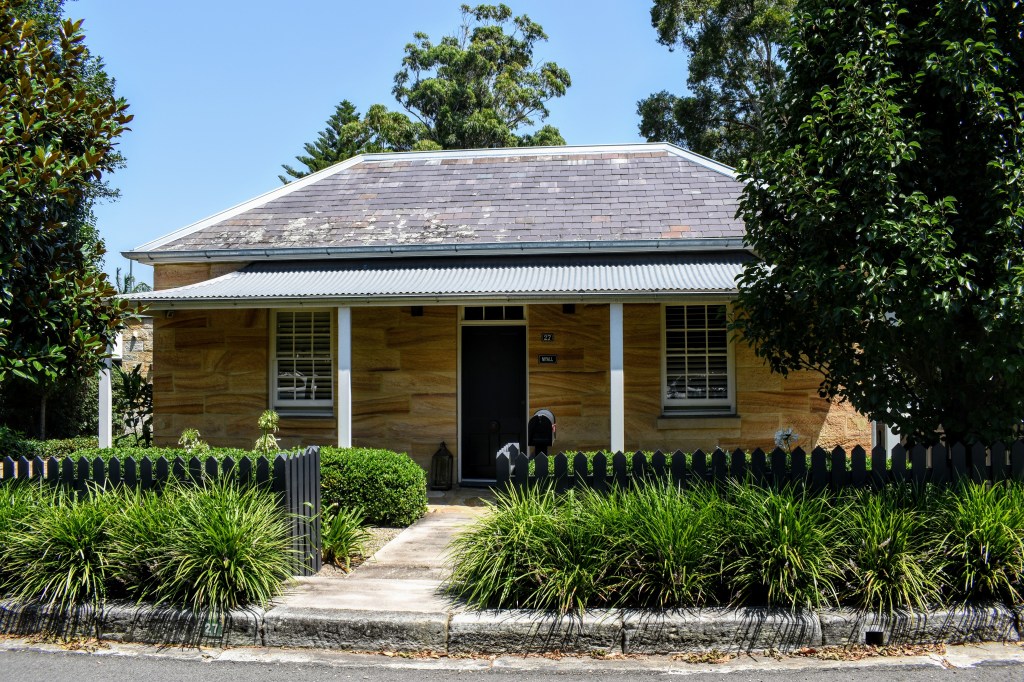
But the back streets are even more interesting. The problem with this peninsula is that there are a lot of dead ends, but if you head down the side roads, you find some views you would never have expected.
There is plenty of real estate porn, much of it built in the blonde to caramel Sydney sandstone which is so characteristic of the 1800s and the early 1900s. Some of it has aged artfully, other houses have been cleaned, updated and extended. But, all in all, it’s a fascinating wander through a slice of a Sydney’s early history – home to the wealthy, then and now.
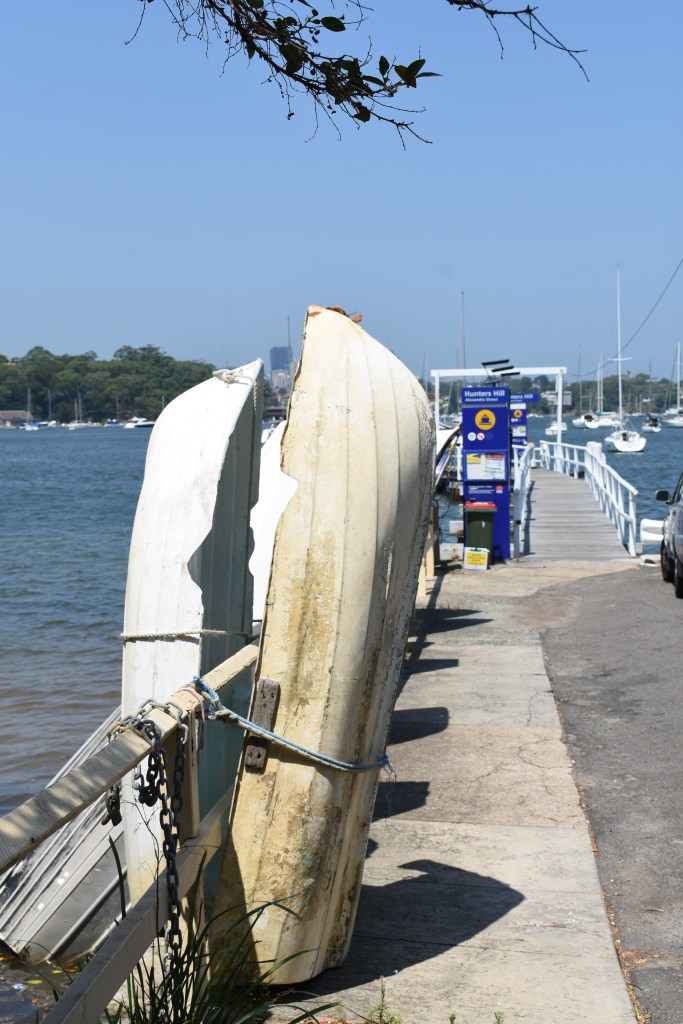
For the first time in my life, I walk to the bottom of Alexandra Rd and discover a ferry wharf. It enjoys outstanding harbour views – as do the expansive waterfront properties which surround the bay. But like pretty much every harbourside location, it shares its space with battered dinghies and tinnies.
My walk back uphill takes me through a few more back streets, passing by St Peter Chanel. Like all the churches on this peninsula, it enjoys some prime harbour views, though a little obscured by recent vegetation growth.
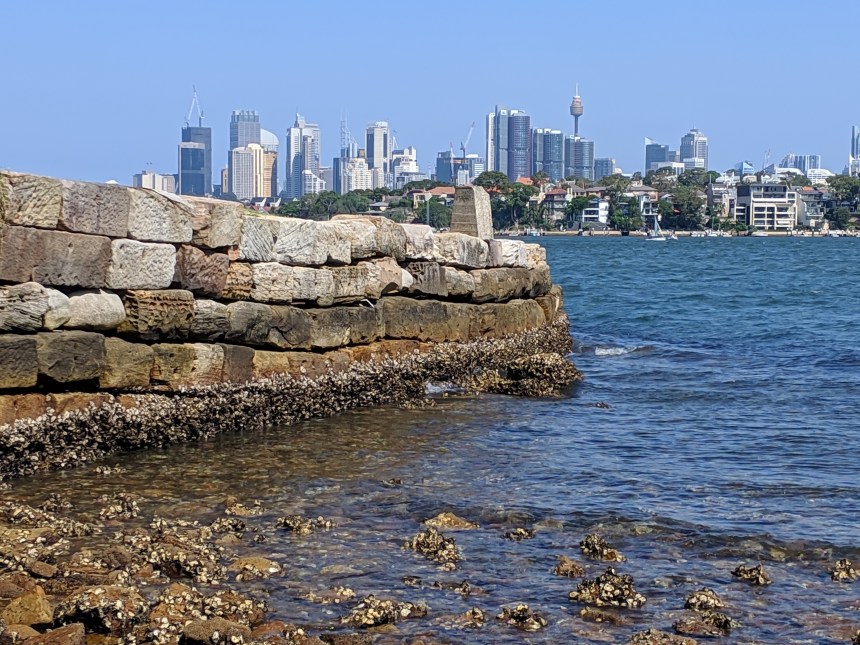
From here, it’s a footpath walk along Woolwich Road. There are some great properties, but many are hidden behind sandstone walls and/or hedges and trees. But once you crest the hill, the city of Sydney and its harbour opens out before you. This is one of Sydney’s great views, enjoyed for free from the parkland (or even better from the upper floor of the Woolwich Pier Hotel).
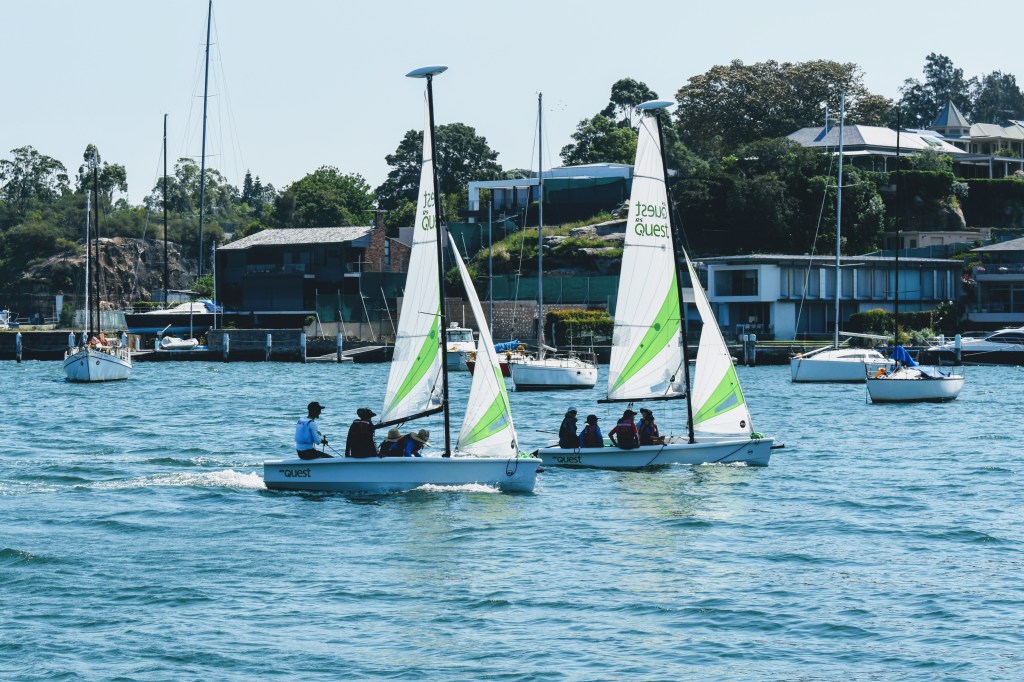
From the pub to Valencia Street wharf is sort of boring, but the wharf itself provides a lovely vista across to Cockatoo Island, and to the city. I’m a little nostalgic, so I continue along to Onions Point, where I first learnt to sail as a young cub or scout. There’s a touch of serendipity when I discover that this prime piece of waterfront real estate is still occupied by the Scouts – it’s wonderful that kids from so many backgrounds have access to the harbour and all its joys.
Heading back, I enter one of the best pieces of parkland on the harbour shore. Opposite the pub, it’s called the Goat Paddock, and the local council has done a great job of building a sandstone path down to the shoreline. There are sensational views, but it’s what lies below which is most interesting.

Woolwich Dock was carved out of the sandstone in the late 1800s as a dry dock, and was taken over by the military in the early 1960s. It is now home to multi-million dollar yachts that chase line honours in the Sydney-to-Hobart and other ocean races, but it retains a certain mystique and otherworldliness courtesy of the damp sandstone, weeping ferns and cool humidity.

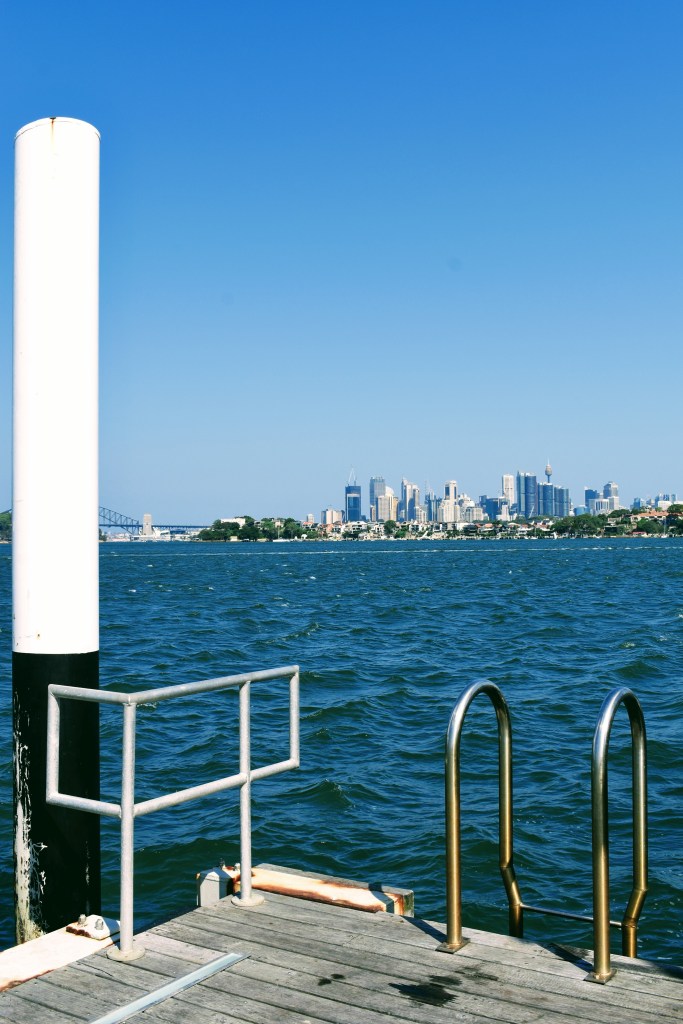
Around the corner is Clarkes Point Reserve, a hidden gem in plain view. The expansive grassed areas command panoramic views up and down the harbour, taking in Cockatoo Island, inner west suburbs such as Rozelle and Balmain, the bridge and the city. I’m pretty sure that every time I’ve visited there have been fishermen casting a line from the sandstone retaining walls, kids kicking balls and families picnicking. It absolutely heaves with people watching the New Year’s Eve fireworks.
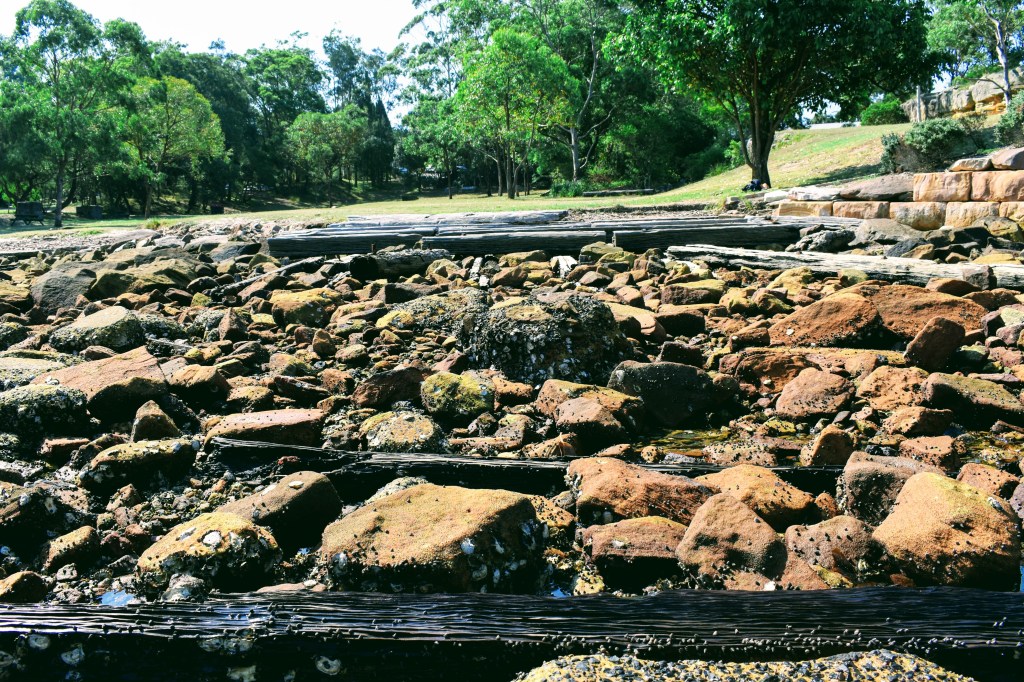
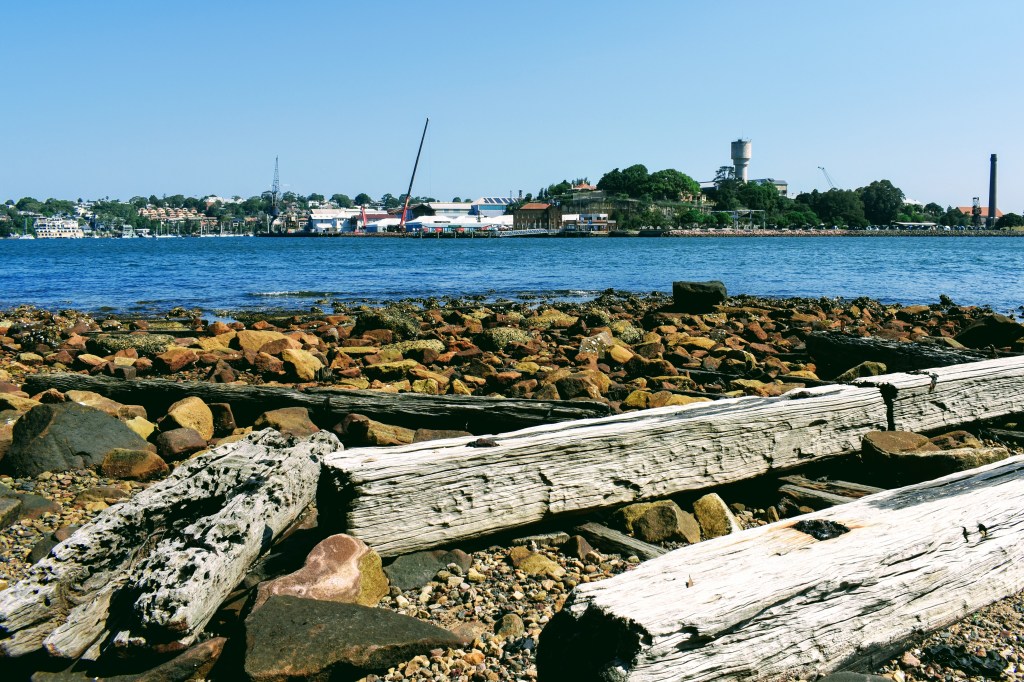
I continue along the harbourside past the sailing club, then the marina pushes the trail back to Alfred St, the main entry to Kelly’s Bush. Somewhat forgotten these days, it was the site of one of Sydney’s initial environmental battles in the early 1970s, when a group of local residents banded together to oppose housing development. They enlisted the support of the trade union movement, which imposed the first green ban blocking work on the site, and it was eventually returned to the public some years later.
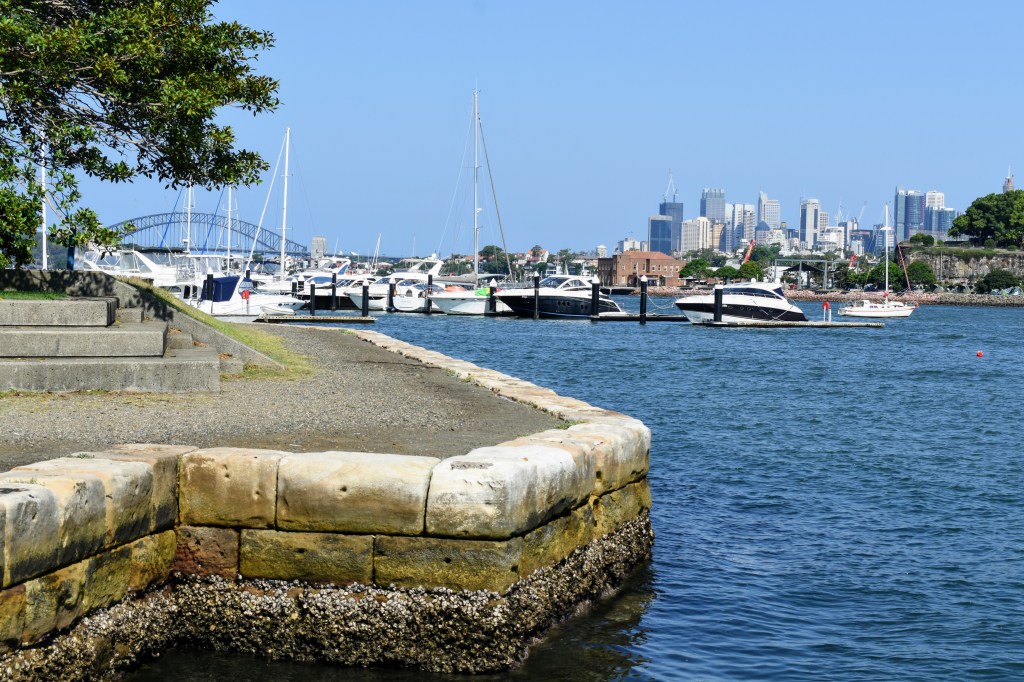
Apart from the odd fisho, it now seems to be an area known only to locals. There is a small amount of open space on the waterfront, but the rest of Kelly’s Bush remains just that – bush. There is a complex network of structured and unstructured tracks winding through the park, and it’s not unusual to come across a variety of birdlife and lizards.
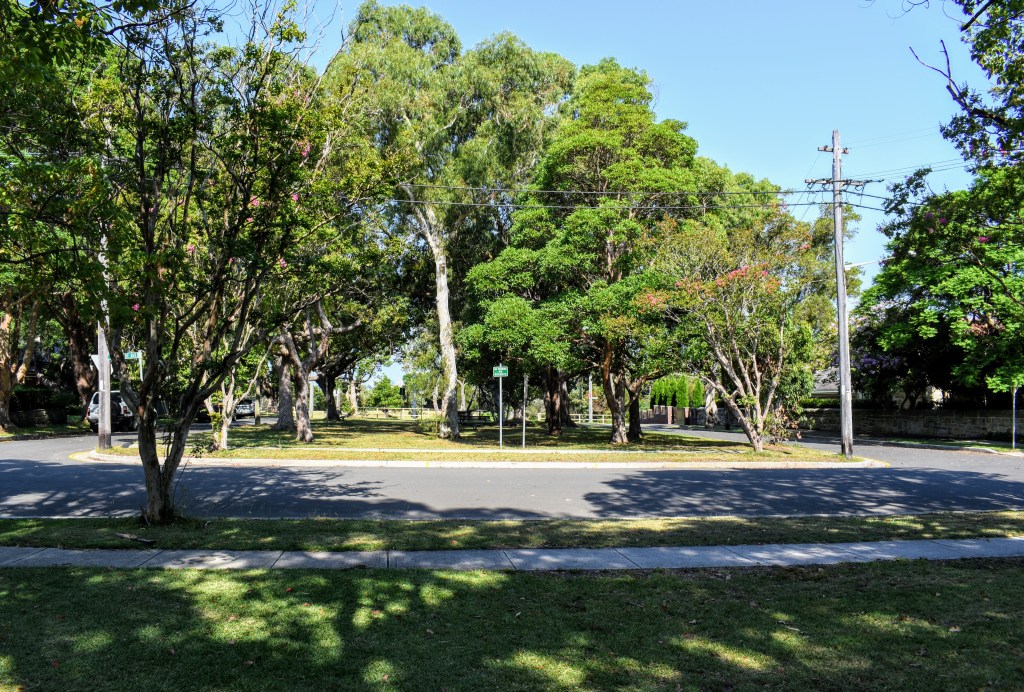
Heading north, I reach the bottom of Weil Park and my favourite street in Hunters Hill – Prince Edward Parade. This street is divided by a massive “median strip” – a forested parkland which runs between the heritage houses on both sides for a couple of hundred metres. I’m not sure who designed this street, but I tips me ‘at!
Getting a little leg-weary, I rejoin Woolwich Rd and follow the main drag back, checking out the real estate I can’t afford along the way. This brings me to the Hunters Hill village sitting atop the ridge, and the welcome sight of the Hunters Hill Hotel, where a cold beer awaits!
 On The Emerald Edge
Leave a comment