Hunters Hill to Rozelle & Callan Park
May 18, 2019
Election day is a good time to get away from it all, but when you’re walking through the suburbs, it’s hard to avoid some of the noise. Mostly, however, we managed to miss the many polling places that lay in our way by sticking to the back streets – which are far more interesting anyway!
There’s a well-known fundraising walk in Sydney called the 7 Bridges Walk which circles the western side of the harbour, but we decided to cross just three of them (and deviate from the route). We’ll do the other bridges another day.
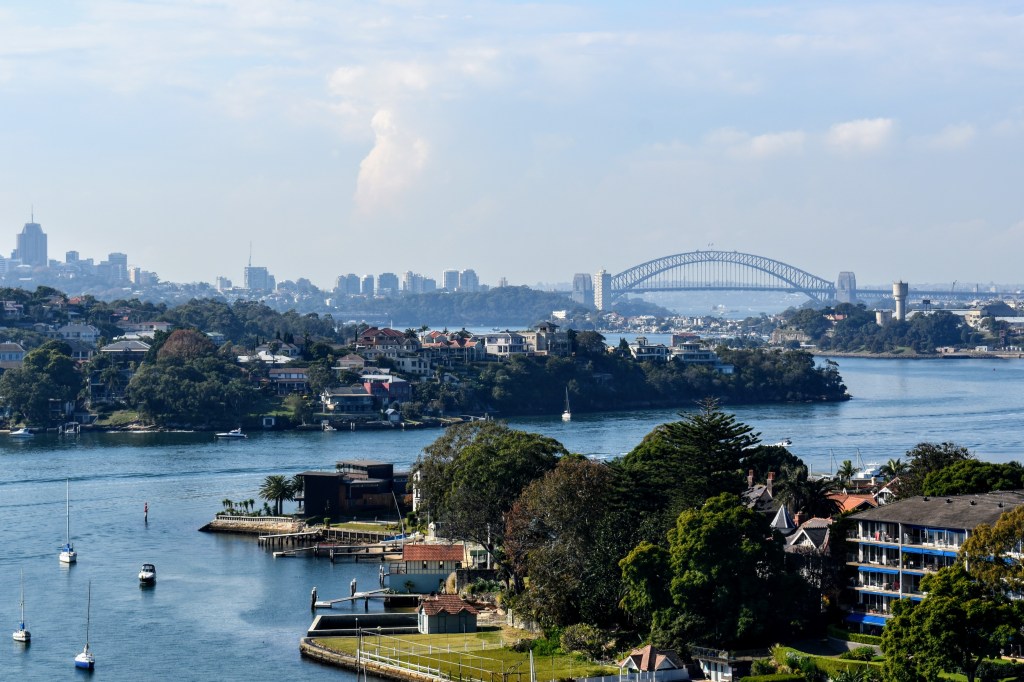
The starting point was the Hunters Hill Scout Hall, tucked in behind Burns Bay Rd and Church St. From there it is a quick trot downhill on to Tarban Creek Bridge, which has expansive views up the Woolwich peninsula towards the city (my Woolwich walk is worth a look).

Within minutes, we’d crossed our first bridge, and were in sight of our second. Leaving the busy road, there is a pleasant detour through the back streets of Huntleys Point, another of Sydney’s smallest suburbs. You can understand why anyone would love to live here – heritage houses, absolute waterfronts and some gun-barrel views up the harbour.

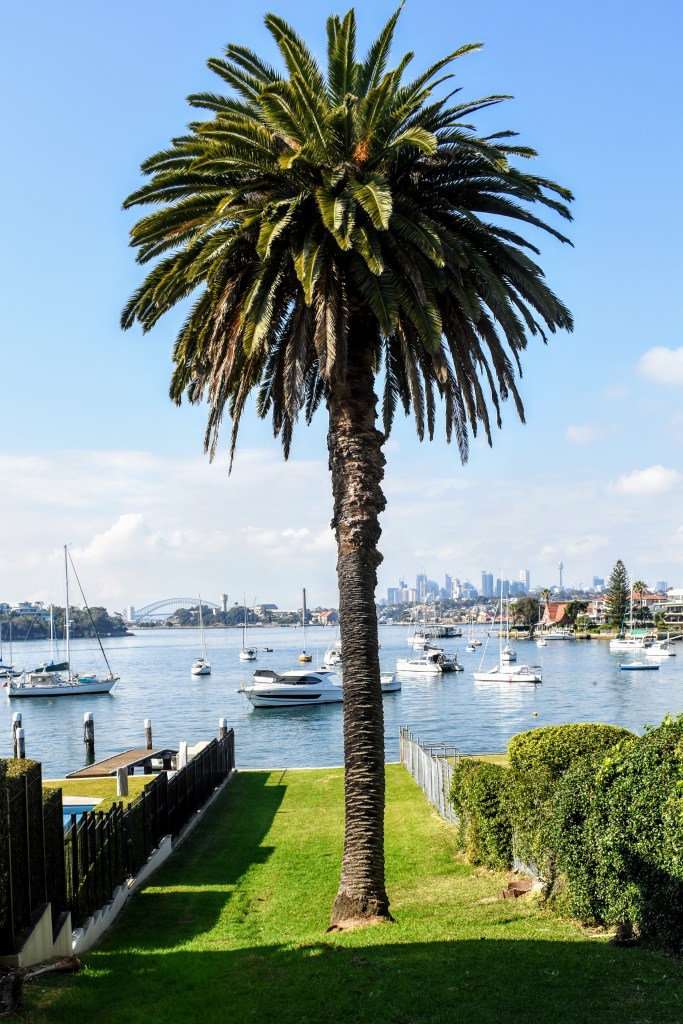
But there’s something for the rest of us. Just before the Gladesville Bridge, there is an access path which leads down to a shell-strewn beach on the harbour, a rusting slipway off to the side. Millions of dollars of underused yachts and launches lie at anchor as we enjoy views up, down and across the harbour. A fisherman is trying his luck, perched on the rocks under the arch of the bridge.

Back up the hill, we enter the subway which leads us up to the pedestrian path across the Gladesville Bridge, an engineering marvel opened in 1964. It’s noisy as the traffic passes a metre away, and the narrow fencing makes photography difficult. It’s hazy today due to hazard reduction burning, but the views to the city from the apex are still pretty stunning.
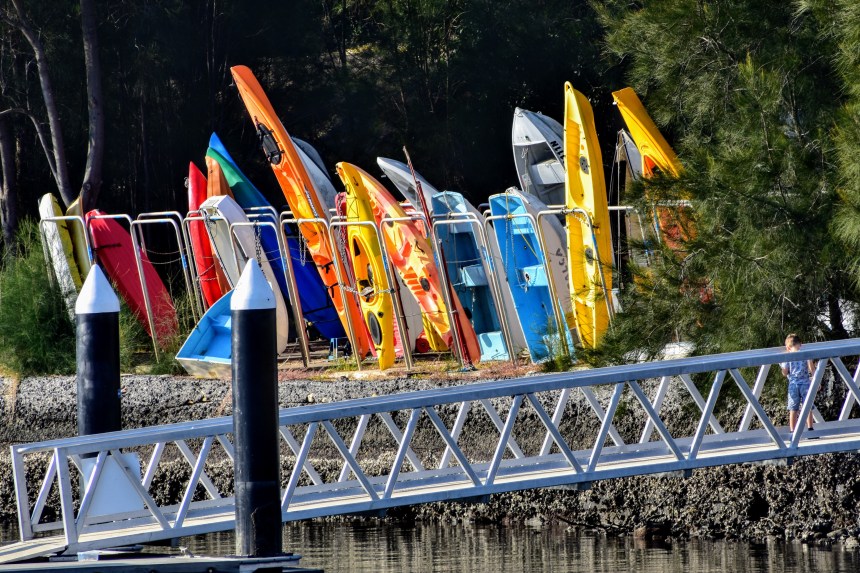
Once we cross the bridge, we head into the back streets of Drummoyne and admire the pre-war housing – a mix of middle class bungalows and seriously wealthy mansions. Sadly, the harbourside has become over-built with apartments as we work our way around the peninsula. They’ve blocked the water views of the older housing, but every now and then there is an access lane which leads to a ferry wharf, a reserve, or even a beach of sand, tessellated sandstone and a bunch of upright dinghies.
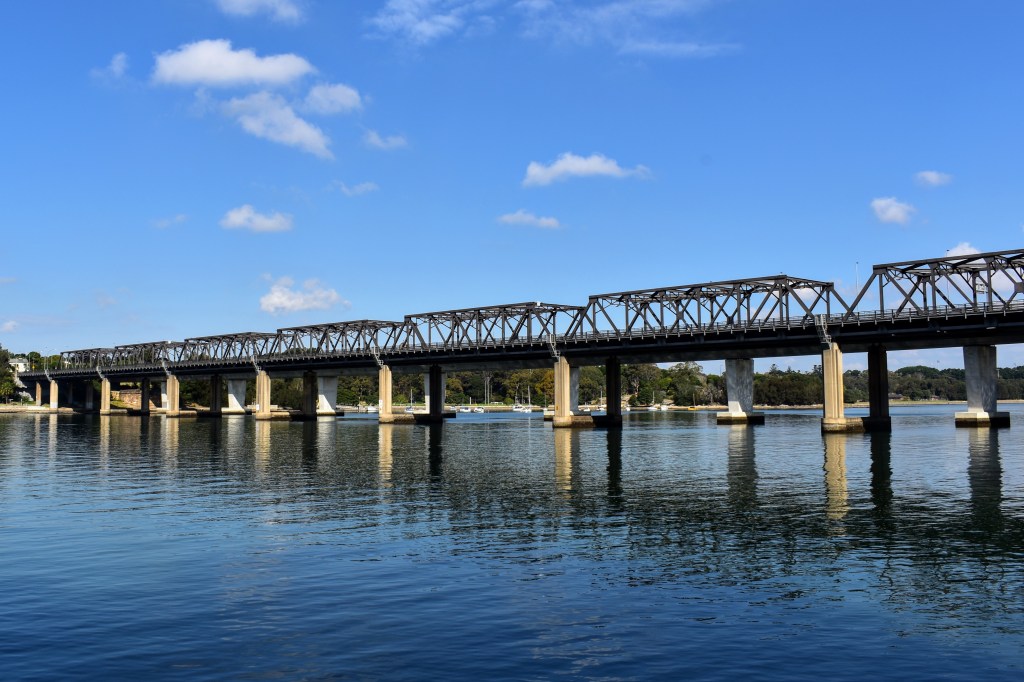
After the team recaffeinates at Birkenhead Point, we hit bridge number three. The old Iron Cove bridge has a walkway along the eastern side, the new one has a shared path along the western side, part of the famous Bay Walk/Bay Run – depending on your preferences.
We cross the new one, and head west. It’s a bit of a highway, with walkers, runners, cyclists, scooters and the odd skateboard. We divert up the sandstone stairs across the point, skirting some (1970s?) brick hospital accommodation which is boarded up and fenced, but hardly needing heritage protection.

Crossing the Bay Walk again, we head up behind Callan Park Oval and under some ancient fig trees. As we crest the hill, a whole new world unfolds. This is the first time that I’ve actually gone into Callan Park, a one time psychiatric hospital which dates back to the mid-1800s, with heritage buildings scattered across expansive lawns.

Sydney sandstone has incredible appeal. It is a signature material across colonial Sydney, and you can see it in many places in the city, but here it sits in beautifully-cut buildings, without being crowded out by skyscrapers. Some of the buildings have been renewed to an extent, while others languish behind cyclone fencing in need of some TLC. But all are intriguing
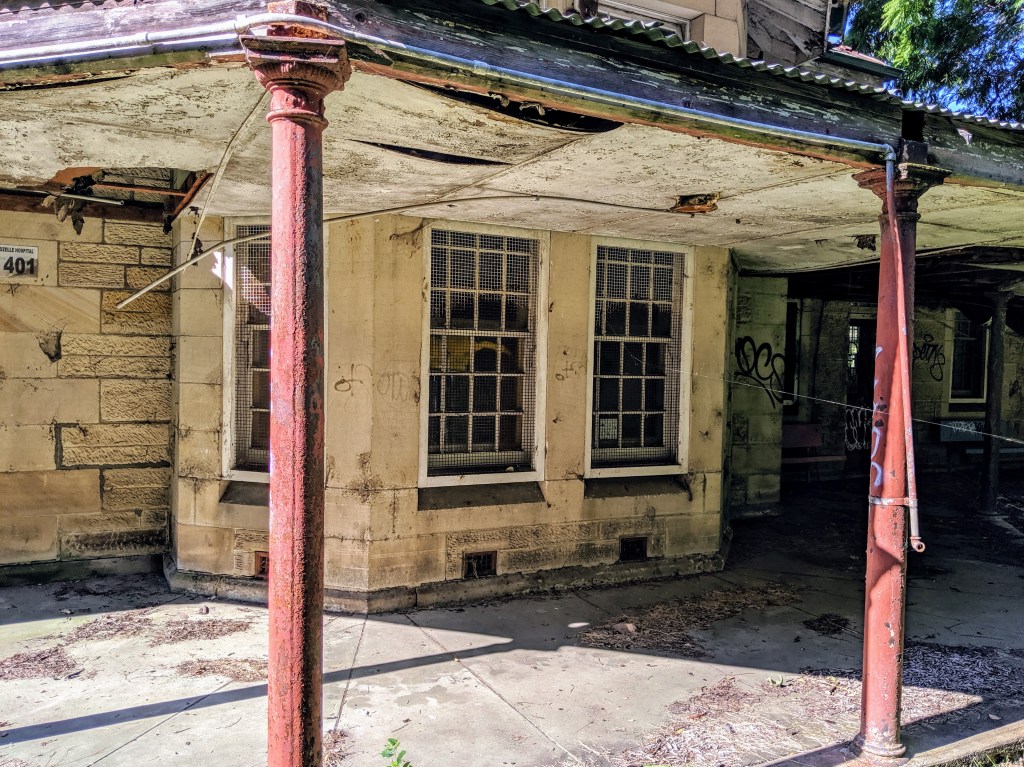
Some are occupied by the Sydney Writers’ Centre and others, but governments of all stripes are still a bit undecided about the future of Callan Park. It’s about the delicate balance between preservation, accessibility and (over)-utilisation.

Callan Park is a treasure in both its space and its history, linking indigenous history with colonial heritage on an unmatched harbourside location. And it sits peacefully between a couple of Sydney’s major roads – just another patch of paradise overlooked by many residents, apart from the locals.
 On The Emerald Edge
Leave a comment